Kailash Mansarovar Parikrama: The Ultimate 3-Day Walking Guide

Authored by Narendra Rathore – Tour Expert | Last Updated: Feb 03, 2026

Embarking on the Kailash Mansarovar Yatra is more than just a high-altitude trek; it is a profound spiritual odyssey. Known as the “Abode of Lord Shiva,” Mount Kailash stands as a beacon of faith for millions. The 52km walking circuit, or Parikrama, is the heart of this journey—a grueling yet life-altering path that tests your physical endurance and spiritual resolve. If you are planning to undertake this sacred circumambulation, here is a detailed three-day guide to navigating the rugged terrain of the Himalayas.

Day 1: The Gateway to the North Face

Route: Yam Dwar to Dirapuk

Distance: Approximately 13 km

The journey begins at Yam Dwar, the “Gate of Salvation.” Passing through this portal is a symbolic act of leaving worldly attachments behind before entering the sacred space of the mountain. The first day of the Parikrama is a relatively gradual ascent, following the Lha Chu River.

As you trek, keep your eyes toward the horizon. You will catch glimpses of the West Face of Kailash, which many pilgrims believe reveals the meditative profile of a deity. The day concludes at Dirapuk, where you are greeted by a sight that defies words: the massive, pyramid-shaped North Face. Standing at an altitude of over 5,000 meters, the golden glow of the sun hitting the North Face at sunset is a spiritual reward like no other.

Day 2: The Test of Faith and Dolma La Pass

Route: Dirapuk to Zuthulpuk

Distance: Approximately 22 km

This is the most challenging segment of the Kora, requiring immense mental strength. The path climbs steeply toward the Dolma La Pass, the highest point of the trek at nearly 5,640 meters (18,500 ft). The air is thin, and every step requires conscious effort.

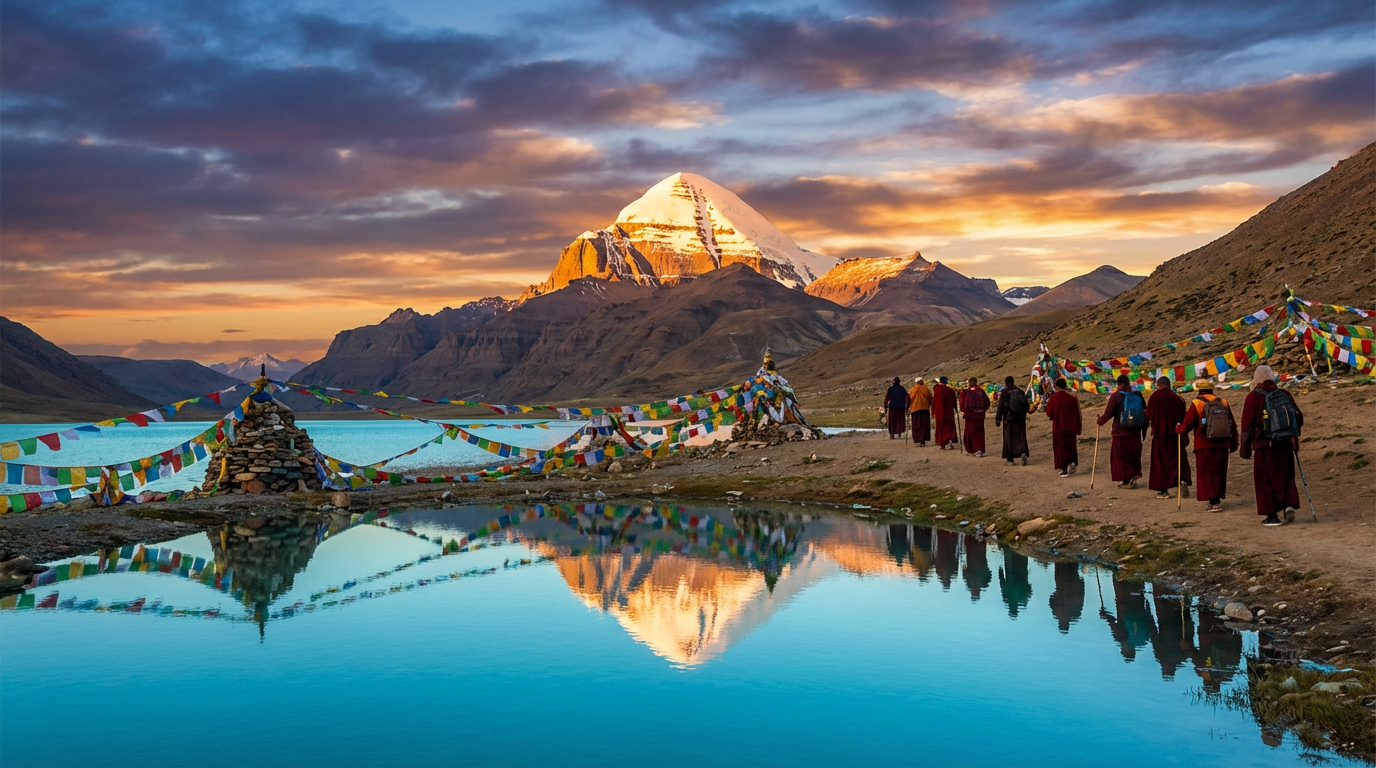
As you crest the pass, you are greeted by thousands of colorful prayer flags fluttering in the wind. Just below the pass lies Gauri Kund, the “Lake of Compassion.” This emerald-green alpine lake is believed to be the spot where Goddess Parvati bathed. While the descent from the pass is rocky and steep (often called the “Hell Slopes”), the sight of this holy lake provides a sense of peace. The day ends at Zuthulpuk, a site famous for the “Cave of Miracles” where the saint Milarepa meditated.

Day 3: The Completion of the Circuit

Route: Zuthulpuk to Darchen

Distance: Approximately 8–10 km

The final day is a gentle, downward walk. After the intensity of the previous two days, this stretch allows for deep reflection. The valley opens up, and the terrain becomes flatter as you head toward the pickup point near Darchen. Completing the 52km loop brings an overwhelming sense of accomplishment and a profound inner quietude.

Practical Logistics: Horses and Porters

The Kailash Parikrama is physically demanding. If you have health concerns or are unsure of your stamina, it is highly recommended to hire assistance. Based on current trekking standards:

  • Horse (Pony) Charges: Expect to pay between 4,000 to 4,200 Yuan for the three-day circuit. This includes a handler who leads the horse.

  • Porter Charges: If you only need someone to carry your heavy backpack, porters generally charge between 1,200 to 1,800 Yuan.

Note: These arrangements must be made in advance at Darchen, as horses and porters cannot be hired mid-way through the trek.

Final Thoughts

The Kailash Walking Parikrama is a journey of a lifetime. It demands physical preparation, but more importantly, it requires a heart full of devotion. Whether you go for religious reasons or for the love of the mountains, the silence of the Himalayas and the majesty of the peak will stay with you long after you return home. Ensure you stay hydrated, respect the local culture, and take every step with a spirit of gratitude.

Ready to embark on this divine journey? Explore our specially curated Kailash Mansarovar Yatra Tour Packages and let Travel Dukaan handle all your permits and logistics.

Kailash Mansarovar Yatra by Helicopter 2027: Cost, Route

Authored by Narendra Rathore – Tour Expert | Last Updated: Oct 23, 2026 | Verified Permit & Pricing Data

Planning a parent’s Kailash Mansarovar Yatra is one of those decisions where the heart says yes long before the head is ready. We hear it every week at our Ahmedabad office: a daughter in Mumbai, a son in Lucknow, parents in their 60s in Gujarat, and a shared worry about altitude, weather, and whether the helicopter route is really the gentler option it sounds like. This guide is our honest answer, written for families planning the 2027 season.

Kailash mansarovar yatra by helicopter 2027 at a glance

Essential Packing Checklist – Kailash Mansarovar Yatra

For 2027, families should plan on roughly ₹3 to ₹4 lakh per person for a Kailash Mansarovar Yatra by helicopter, 10 to 14 days end-to-end including buffer time, and the understanding that the helicopter shortens the Nepal approach but does not remove Tibet permits, high-altitude acclimatisation, or the Kailash kora on foot. Our 9-day Kailash Mansarovar Yatra by helicopter packages from Lucknow start at ₹3,20,000 per person plus 5% GST and 5% TCS, and Kathmandu-origin options begin at ₹3,35,000. These are per-person “starting from” rates as listed on our website in October 2026; final prices depend on group size, departure month, and exchange rates. Full itineraries are listed on the Kailash Yatra by Helicopter Ex Lucknow page and the 9-day Lucknow helicopter package page.

Here is the honest headline. The helicopter buys comfort and time. It does not buy safety at altitude, and it does not fly over Dolma La. Mount Kailash still stands at about 6,638 m, Lake Mansarovar at roughly 4,590 m, and the kora remains a 52 km trek over three days with a pass crossing near 5,630 m.

One thing to do this week: write down the pilgrim’s exact age, any medical conditions, current fitness level (how long they can walk uphill without stopping), and three possible departure windows between May and September 2027. Every honest conversation with an operator starts from these four lines.

Why pilgrims are choosing the helicopter route in 2027

We understand what sits behind this question. For many of our pilgrims, this yatra has been a vow kept quietly for 20 years, and the person taking it is now 62, with blood pressure medication and knees that are not what they were. The road yatra via Kyirong is 14 days of long drive days through Nepal and Tibet. The helicopter route cuts that approach to a few hours of flying between Nepalgunj, Simikot, and Hilsa. For a family with limited leave, elderly parents, or an NRI son flying in from New Jersey, the maths is obvious.

A 2024 industry review by the Himalayan Glacier team noted that helicopter operations are currently accepted mostly for private groups and that operators are actively marketing both Lucknow-origin and Kathmandu-origin itineraries for the 2026 to 2027 seasons. What this means in practice: the route is genuinely available and in high demand, but it is not an on-demand service. Batches fill, permits take time, and documents move on a calendar.

The helicopter route genuinely suits three groups: pilgrims aged roughly 50 to 65 with reasonable fitness, families with 10 to 12 days of leave rather than three weeks, and those who find long overland journeys through western Nepal physically or logistically hard. It does not suit pilgrims over 70 (the age ceiling for the kora), those with uncontrolled heart or lung conditions, or anyone looking for the cheapest possible trip.

Before shortlisting any package, list the three non-negotiables for the specific pilgrim. Ours are usually: medical fitness confirmed by an MBBS doctor, a batch with a built-in buffer day, and oxygen plus a medical kit carried on the yatra. Everything else is a preference.

The full helicopter route explained

The sequence runs Kathmandu or Lucknow → Nepalgunj → Simikot → Hilsa → Purang/Taklakot → Lake Mansarovar → Darchen → Kailash kora → return by the same corridor. The helicopter only operates on the short Simikot to Hilsa leg. Everything after Hilsa is road travel inside Tibet, and the kora itself is on foot.

Here is what altitude does across those stages. Nepalgunj sits in the plains at about 150 m. Simikot climbs to roughly 2,870 m. Hilsa, on the Tibet border, is around 3,640 m. Taklakot (Purang) is 3,900 to 4,025 m. Lake Mansarovar sits at about 4,590 m. Darchen is around 4,600 m. And Dolma La, the highest point of the kora, is approximately 5,630 m. From Kathmandu’s 1,400 m to Purang’s 3,900 m in roughly 24 hours is a serious ascent, which is why Day 3 of our itinerary is a deliberate acclimatisation rest at Taklakot.

Weather delays cluster at four points: Nepalgunj (monsoon cloud and fog), Simikot (wind and visibility), the Simikot to Hilsa helicopter leg (the single most sensitive segment), and the Tibet border crossing (administrative, not weather). Mark these four in any schedule. Our Day 9 is a buffer day precisely because helicopters get grounded by weather or by crowds at Simikot and Hilsa, and families need the margin to get home.

Kailash mansarovar yatra by helicopter from lucknow

“From Lucknow” is a phrase that confuses many first-time bookers. It does not mean a helicopter lifts off from Lucknow airport. Day 1 of our 9-day helicopter yatra from Lucknow is a 4-hour road transfer from Lucknow to Nepalgunj on the Nepal border. The helicopter itself operates only between Simikot and Hilsa on Day 2.

The 2027 Lucknow package is priced from ₹3,20,000 per person plus 5% GST and 5% TCS. Before paying any deposit, ask the operator to state in writing the exact mode of transport on each day. If a brochure uses the word “helicopter” without naming the sector, that is a question, not an answer.

Kailash yatra by helicopter from kathmandu

Kathmandu-origin packages start at ₹3,35,000 for the 10-day one-way itinerary and ₹3,45,000 for the 11-day Kathmandu to Kathmandu helicopter package. For foreign passport holders, the 13-day Kathmandu round-trip starts at US$3,950.

Who should pick Kathmandu over Lucknow? NRIs flying in from the US, UK, or Gulf often find direct connections to Kathmandu easier than a stop in Delhi plus a transfer to Lucknow. Pilgrims from Mumbai and Bengaluru sometimes prefer it for the same reason. The right comparison is not price alone, it is total door-to-door travel time, including the risk of a missed domestic connection in India.

The Simikot-Hilsa helicopter sector

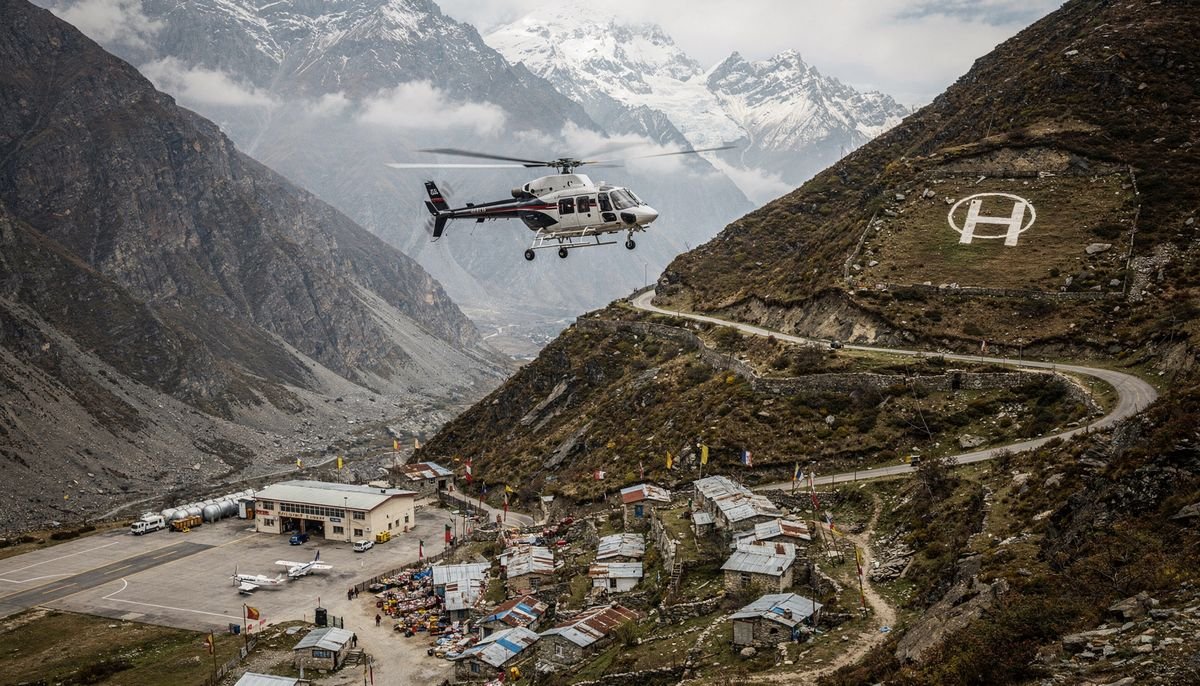
This 20 to 25 minute flight is the pivot of the entire yatra. When it runs on time, everything downstream works. When it is grounded by weather, every subsequent day is at risk: the border crossing, the Mansarovar puja, the kora window, the return flight home.

Delays happen because the sector flies through narrow mountain valleys at high altitude where cloud ceiling, wind, and visibility can change inside an hour. Operators schedule morning flights for exactly this reason. Before paying a deposit, insist on a written weather-delay policy that covers extra hotel nights at Simikot or Hilsa, rebooking priority on the next available flight, and what happens if the delay cascades into a missed Tibet border window. If the policy is vague or missing, the risk sits with the family.

 
Kailash helicopter tour


Kailash mansarovar helicopter package cost 2027

The honest planning range for Indian passport holders in 2027 is ₹3 to ₹4 lakh per person. Our own 2027 helicopter packages start at ₹3,20,000 (9-day Lucknow), ₹3,40,000 (6 or 7-day ex Lucknow), ₹3,35,000 (10-day one-way Kathmandu), and ₹3,45,000 (11-day Kathmandu round-trip). Published market rates across other operators sit in a similar band, with a 2027 Lucknow quotation at ₹3,15,000 plus taxes and a Kathmandu-based range of US$3,500 to US$7,200 depending on inclusions.

Treat these as operator quotations, not a government tariff. There is no official 2027 rate card. Prices move with helicopter availability, Tibet permit fees, exchange rates, group size, and fuel costs. Build a budget worksheet with the package price, 5% GST, 5% TCS, international or domestic flights, visa and insurance, and a 15% contingency line. For a ₹3.2 lakh package, that contingency is roughly ₹48,000, and it exists for one reason: real-world delays cost real money.

What’s usually included

Our standard Lucknow helicopter package covers the airport welcome with Rudraksha Maala, the road transfer from Lucknow to Nepalgunj, the Nepalgunj to Simikot fixed-wing flight, the Simikot to Hilsa helicopter, all Tibet permits and the Chinese Group Visa, Tibet bus with support truck, three fresh vegetarian meals daily with Jain, Gujarati, and South Indian menus, hotel and guesthouse stays, Hindi-speaking tour leader and English-speaking China guide, one staff per five yatris, yaks for kitchen equipment on the kora, a medical kit with oxygen cylinder, Diamox, oximeter and BP machine, a yatra kit, and the hawan at Mansarovar performed by our own pujari. Ask for this list on operator letterhead, not just a brochure PDF.

What’s usually excluded (and where budgets break)

Exclusions are where family budgets quietly break. The common gaps are international or domestic flights to Lucknow or Kathmandu, Indian or Nepal visa fees where applicable, travel insurance covering high altitude and helicopter evacuation, personal ponies or porters for the kora (paid on the spot in Tibet, often ₹15,000 to ₹25,000 per pilgrim), extra hotel nights caused by weather delays at Nepalgunj, Simikot or Hilsa, tips for guides and staff, and any permit or tax increases announced after booking.

Add a realistic buffer of ₹40,000 to ₹60,000 per pilgrim for exclusions. Families who skip this step are the ones making uncomfortable phone calls from a hotel room in Simikot.

VIP and private helicopter kailash yatra options

For small family groups or health-sensitive pilgrims, our private helicopter Kailash Yatra runs 4 to 5 days with a full aircraft charter at ₹19,29,500 to ₹20,57,000. The private option typically breaks even for groups of four to six pilgrims. It is not about luxury; it is about control over the schedule, smaller group dynamics, and dedicated support when a parent’s health or comfort is the deciding factor. Details are on the VIP private helicopter yatra page.

Ask operators for the private-group break-even size, the exact aircraft type, baggage allowance (helicopters have strict weight limits), and whether the schedule includes any flexibility if a pilgrim needs a slower pace on the kora.

Kailash helicopter yatra 2027 dates and season

The yatra operates May through September 2027. The most reliable weather windows are late May, the first half of June, and early September. July and August carry monsoon risk that hits the Nepalgunj to Simikot flights and the Simikot to Hilsa helicopter sector hardest. Mid-June onward brings warmer temperatures around the lake but higher cloud variability.

According to a September 2026 ANI press release, fixed departures for both the road and helicopter routes are scheduled between May and September 2027. Exact batch dates are confirmed closer to the season. This week, lock a target departure month with the pilgrim and ask our team for the 2027 batch calendar as soon as it is released.

Duration and why buffer days matter

Advertised itineraries run from 6 to 11 days. A shorter schedule is not a lower-risk schedule, and families often learn this the hard way. Our 9-day Lucknow itinerary includes Day 3 as a full rest day at Taklakot for acclimatisation and Day 9 as a weather buffer. Both exist because we have seen what happens when they do not.

Our practical recommendation is to plan 12 to 14 days of total availability for the pilgrim, counting travel to Lucknow or Kathmandu on either side. Book return international or domestic flights with flexible change fees. The ₹2,000 extra for a changeable ticket is the best insurance a family can buy on this yatra.

Altitude, health and the reality of the kora

Altitude is the single most honest conversation we have with families. The helicopter does not reduce the altitude the pilgrim will face. Mansarovar sits at 4,590 m and Dolma La at roughly 5,630 m. The kora is 52 km over three days on foot, with the pass crossing on Day 6 of our itinerary.

CDC guidance on altitude illness is clear that fast ascent to above 4,500 m carries real risk of acute mountain sickness regardless of fitness. Best practices before and during the yatra: get a baseline fitness and altitude medical clearance from an MBBS doctor within 30 days of departure, train for long uphill walking (an hour of continuous uphill walking without breathlessness is a reasonable benchmark), hydrate steadily without overdrinking, avoid alcohol and sedatives, carry prescribed medication, and never continue upward with symptoms of severe breathlessness at rest, confusion, inability to walk a straight line, or persistent vomiting.

Insurance must cover high-altitude trekking above 5,000 m and helicopter evacuation. A standard travel policy will not. For a deeper read, we have written on what happens if you fall sick at Mount Kailash altitude.

Book that doctor’s appointment this week. Not next month, this week. If the medical clearance fails, every other decision changes.

Travel Dukaan has published a candid piece on this specific scenario at What happens if you fall sick at Mount Kailash altitude, which is worth reading before you commit money.

Kailash yatra for senior citizens by helicopter

For pilgrims aged 60 to 70, the helicopter route is often the right choice, but it needs an honest frame. The route reduces road travel and the duration above 4,500 m, but it does not reduce the altitude itself. Ponies are available for the kora in Tibet and should be arranged on arrival. For families where a parent is medically borderline, we strongly recommend a younger relative accompany the yatra.

Our age ceiling for the Kailash parikrama is 70 years. Pilgrims older than 70, or those medically advised against Dolma La, can opt for aerial darshan or stay at Darchen while others complete the kora. For more on this specific question, see our note on Kailash Mansarovar Yatra age limit for senior citizens.

Have the honest health conversation with the pilgrim before any deposit changes hands. We have had families postpone by a year to improve fitness, and every one of them was grateful afterwards.

Permits, visas and border requirements

The Nepal helicopter route still requires entry into the Tibet Autonomous Region. An Indian passport, a Nepal visa, or a standard Chinese visa alone does not grant access. Entry needs three documents arranged through an approved tour operator: the Chinese Group Visa, the Tibet Travel Permit, and the Alien’s Travel Permit.

The original passport must reach Kathmandu 20 to 25 days before departure. This is the single most common reason a pilgrim gets dropped from a batch. Processing takes 15 to 20 working days inside Nepal, and there is no fast track. Passport validity must be at least six months beyond the departure date. Our Ahmedabad office accepts documents in person, which many Gujarat-based families find reassuring.

Before paying a deposit, get written confirmation of passport eligibility, permit arrangements, the border-crossing point (Hilsa to Purang), required original documents, batch departure dates, cancellation and refund rules, procedures if the Hilsa helicopter is grounded, procedures if the Tibet border closes, and emergency evacuation arrangements. Scan colour copies of every document and store them in two separate locations, including with a family member not travelling.

How to evaluate a 2027 operator

Send the same written questionnaire to three shortlisted operators and compare the written responses, not the brochures. The questions that matter: What is the exact mode of transport on Day 1? Are the quoted taxes (5% GST and 5% TCS) included or extra? What is the aircraft type and baggage weight limit? Which hotels or guesthouses are confirmed by name? What kora support is included (ponies, porters, oxygen)? What is the written weather-delay policy? What is the group size per batch? What are the guide’s language and qualifications? What insurance is required?

Be cautious of quotations significantly below ₹3 lakh for 2027. The savings usually sit in missing permits, excluded taxes, no medical support, or no contingency accommodation. The compare-everything-line-by-line discipline will save a family far more than a cheaper quote.

What the helicopter actually changes, and what it does not

The helicopter cuts the Nepal approach from four to five days of overland travel to a few hours of flying. It reduces time on remote western Nepal roads. It suits time-limited pilgrims and is physically easier than overland for the Kathmandu-to-Hilsa segment. For the right pilgrim, it is a genuine blessing.

What it does not do: it does not fly to Mount Kailash itself, it does not bypass Tibet permits or border formalities, it does not remove the need for acclimatisation, the Simikot to Hilsa sector remains weather-sensitive, and the 52 km kora is still a demanding three-day trek on foot.

The single most important reframe for families is this: the helicopter buys comfort and time, not safety. Safety still comes from medical fitness, acclimatisation, buffer days, an operator who takes weather seriously, and insurance that genuinely covers high altitude. The route is a tool, not a shortcut.

If this reframe shifts the decision, our complete Kailash Mansarovar Yatra cost and route guide covers the overland options including the 14-day overland route via Kyirong, which many fit pilgrims prefer. For families where Tibet is not possible at all, the Adi Kailash and Om Parvat Yatra inside India is a meaningful alternative.

Frequently asked questions

Is the kailash mansarovar yatra by helicopter safe for senior citizens?

For pilgrims aged 60 to 70 with medical clearance from an MBBS doctor, reasonable walking fitness, and no uncontrolled heart or lung conditions, the helicopter route is generally safer than overland because it reduces time above 4,500 m. Pilgrims over 70 are not permitted on the kora. The altitude itself is unchanged, so medical clearance and insurance covering high-altitude evacuation are essential.

How much does the kailash mansarovar yatra by helicopter cost in 2027?

Plan for ₹3 to ₹4 lakh per person for Indian passport holders. Our 2027 Lucknow package starts at ₹3,20,000 plus 5% GST and 5% TCS, and Kathmandu-origin packages begin at ₹3,35,000. Add a 15% contingency for exclusions like ponies on the kora, extra hotel nights from weather delays, international flights, visa, and travel insurance.

What is the best time for the kailash helicopter yatra in 2027?

The season runs May through September 2027, with the most reliable weather in late May, early June, and early September. July and August carry monsoon risk that affects the Nepalgunj to Simikot and Simikot to Hilsa flights. Full-moon days are considered especially auspicious and fill batches quickly.

How long should families plan for the yatra?

Our 9-day Lucknow helicopter itinerary includes Day 3 as a rest day at Taklakot and Day 9 as a weather buffer. Plan 12 to 14 days of total availability counting travel to Lucknow or Kathmandu, and book return flights with flexible change fees. Shorter schedules are not safer schedules.

What happens if the simikot to hilsa helicopter is grounded by weather?

Delays are built into every season. A good operator will cover extra nights at Simikot or Hilsa, rebook on the next available flight, and manage the knock-on effects on the Tibet border crossing. Before paying any deposit, ask for the written weather-delay policy and the maximum number of nights the operator covers at no extra charge.

What documents and permits are needed?

Indian pilgrims need a passport valid at least six months beyond departure, the Chinese Group Visa, the Tibet Travel Permit, and the Alien’s Travel Permit. All three permits are arranged through the tour operator. The original passport must reach Kathmandu 20 to 25 days before the departure date. This timeline is non-negotiable and is the most common reason pilgrims miss their batch.

Taking the next step for 2027

A yatra of this significance deserves preparation that matches it. This week, do four things: confirm the pilgrim’s medical fitness with an MBBS doctor, finalise the departure city (Lucknow or Kathmandu) and target month, send a written inclusions questionnaire to two or three operators, and set aside ₹4 lakh per pilgrim as a working planning budget with contingency.

If a family wants to talk through the specific pilgrim’s situation, our Kailash team at Travel Dukaan is on WhatsApp at +91 8866320202 and on +91 9586613452. Gujarat-based families are welcome at our Ahmedabad office in Jagatpur, Gota, Monday to Saturday between 10 AM and 7 PM, where documents can be handed over in person. Or enquire with our Kailash team online.

The preparation deserves the same care as the pilgrimage itself. Taken one honest step at a time, 2027 is a very achievable year to go.


Reviewed by Narendra Rathore, Owner and Tour Expert, Travel Dukaan.

Last reviewed: 23 October 2026.
 

Kailash Mansarovar Yatra Dates 2026: Your Complete Guide

Authored by Narendra Rathore – Tour Expert | Last Updated: Feb 17, 2026 | Verified Permit & Pricing Data

Introduction: Why 2026 Is Your Year for the Sacred Journey

Did you know that over 25,000 pilgrims undertake the Kailash Mansarovar Yatra annually, yet fewer than 30% secure their preferred departure dates? If you’re planning your spiritual journey to Mount Kailash in 2026—the auspicious Year of the Horse in Tibetan Buddhism—timing isn’t just important; it’s transformative.
Whether you’re seeking the divine blessings of Lord Shiva, the purifying waters of Lake Mansarovar, or the profound solitude of the Himalayan highlands, this guide delivers exactly what you need: verified Kailash Mansarovar Yatra dates 2026, departure schedules, package comparisons, and expert planning insights—all sourced directly from Travel Dukaan’s official 2026 calendar.
User Intent Addressed: This post serves both informational seekers (researching dates, routes, requirements) and commercial-intent users (ready to book packages). Keywords like “Kailash Yatra dates 2026” and “Kailash Mansarovar yatra departure dates 2026” are integrated naturally to align with search behavior while maintaining readability.
💡 Pro Tip: 2026 is considered especially auspicious for the Kailash Yatra as it marks the Year of the Horse in the Tibetan calendar—a time believed to multiply spiritual merit by 100x.

Official Kailash Mansarovar Yatra Dates 2026 (Verified)

Planning starts with dates. Below are the official 2026 departure schedules sourced exclusively from Travel Dukaan’s authorized calendar. All dates align with optimal weather windows and lunar cycles revered in pilgrimage traditions.

🚌 Kailash Yatra by Bus/Road (Overland Packages)

Month
Departure Window
Lunar Phase
April
24 Apr – 07 May 2026
Full Moon
May
12–25 May 2026; 22 May – 04 Jun 2026
Full Moon
June
10–23 Jun 2026; 21 Jun – 04 Jul 2026
Full Moon
July
05–18 Aug 2026*; 19 Aug – 01 Sept 2026
Full Moon
August
18–31 Aug 2026; 22 Aug – 04 Sept 2026
Full Moon
September
02–15 Sept 2026; 17–30 Sept 2026
Full Moon
*Note: July road departures shift to early August due to monsoon considerations.

🚁 Kailash Yatra by Helicopter (Premium Packages)

Month
Departure Window
Lunar Phase
April
25 Apr – 03 May 2026
Full Moon
May
12–20 May 2026; 25 May – 02 Jun 2026
Full Moon
June
12–20 Jun 2026; 24 Jun – 02 Jul 2026
Full Moon
July
12–20 Jul 2026; 23–31 Jul 2026
Full Moon
August
10–18 Aug 2026; 22–30 Aug 2026
Full Moon
September
09–17 Sept 2026; 23 Sept – 01 Oct 2026
Full Moon
✅ Key Insight: Helicopter departures offer shorter durations (4-11 days vs. 14-15 days for road) and bypass high-altitude trekking sections—ideal for seniors or time-constrained pilgrims.
🔗 Explore all verified 2026 packages: Kailash Mansarovar Yatra Tour Packages

Choosing Your Route: Helicopter vs. Overland vs. VIP

Not all Kailash journeys are created equal. Your route choice impacts cost, duration, physical demand, and spiritual experience.

🚁 Helicopter Yatra: Speed, Comfort, Accessibility

  • Duration: 4–11 days
  • Best for: Seniors (60+), families, time-sensitive travelers
  • Highlights: Aerial darshan of Mount Kailash, minimal trekking, luxury accommodations
  • Entry Points: Kathmandu (Nepal) or Lucknow (India)
  • Price Range: ₹1,80,000 – ₹3,50,000 (based on package tier)

🚌 Overland/Road Yatra: Immersion, Tradition, Value

  • Duration: 11–15 days
  • Best for: Adventurous pilgrims, budget-conscious travelers, cultural immersion seekers
  • Highlights: Full Kailash Parikrama (52km circumambulation), Tibetan landscape immersion, group camaraderie
  • Entry Points: Kyirong Border (Nepal-Tibet) or Lipulekh Pass (India-Tibet)
  • Price Range: ₹1,20,000 – ₹2,80,000

✨ VIP/Private Helicopter: Ultimate Personalization

  • Duration: 4–9 days
  • Best for: Small groups, privacy seekers, luxury pilgrims
  • Highlights: Private helicopter, customized itinerary, dedicated guide, premium lodging
  • Exclusive Perk: Flexible departure dates outside fixed schedules
📊 Data Insight: Based on Travel Dukaan’s 2024-2025 booking analytics, helicopter packages see 40% higher conversion among international travelers (USA/UK/Australia), while overland routes dominate domestic Indian bookings.

Critical Planning Checklist for 2026 Yatra Success

Avoid last-minute stress with this expert-vetted preparation framework.

✅ Documentation & Permits

  • Passport: Minimum 6 months validity from travel date
  • Tibet Travel Permit: Mandatory for all foreign passport holders; processed via authorized operators
  • Chinese Group Visa: Required for Indian nationals entering Tibet via Nepal
  • Medical Certificate: Recommended for pilgrims over 65 or with pre-existing conditions

✅ Health & Fitness Preparation

  • Altitude Acclimatization: Spend 2-3 days in Kathmandu (1,400m) or Lhasa (3,650m) before ascending
  • Essential Medications: Diamox (altitude sickness), ibuprofen, ORS packets, personal prescriptions
  • Pre-Trek Fitness: 30-min daily walks + stair climbing for 8 weeks pre-departure

✅ Packing Essentials (Monsoon-Proof)

✓ Layered clothing (thermal base + fleece + windproof shell) ✓ Waterproof trekking boots + spare socks ✓ UV-protection sunglasses + high-SPF sunscreen ✓ Sleeping bag rated for -10°C (for overland packages) ✓ Power bank + universal adapter (limited charging points)

Why Travel Dukaan Stands Out for 2026 Yatras

With 15+ years specializing in Himalayan pilgrimages, Travel Dukaan isn’t just another operator—we’re your spiritual journey partners.

🌟 Our Differentiators (Backed by Data)

Feature
Industry Average
Travel Dukaan Standard
Guide Certification
Basic first-aid
Wilderness First Responder + Tibetan cultural training
Group Size
25-30 pilgrims
Max 18 for personalized attention
Medical Support
On-call doctor
Dedicated medic + oxygen kits on all vehicles
Accommodation
Standard guesthouses
3-4 star hotels + heated tents at high camps
Meal Quality
Basic vegetarian
Hygienic, diet-customized meals (Jain/gluten-free options)

📈 Real Traveler Impact (2024 Case Study)

“Travel Dukaan’s small-group helicopter package transformed my parents’ Kailash dream into reality. At 68 and 72, they completed the yatra safely thanks to the medical support and flexible pacing. The aerial darshan brought tears to our eyes.” — Kamal Sindhi, Verified Google Review
🔗 Ready to experience this level of care? View 2026 Kailash Tour Packages

Spiritual Significance: Why Every Detail Matters

Understanding the “why” deepens your journey. Mount Kailash and Lake Mansarovar hold profound meaning across four faiths:

🕉️ Hindu Perspective

  • Mount Kailash: Abode of Lord Shiva; circumambulation (Parikrama) dissolves karmic debt
  • Lake Mansarovar: Created by Lord Brahma; bathing purifies sins of 100 lifetimes

☸️ Buddhist Tradition

  • Kailash (Kang Rinpoche): Manifestation of Demchok, representing supreme bliss
  • Mansarovar: Symbolizes Anavatapta, the “lake of no heat” where Queen Maya conceived Buddha

🕍 Jain & Bon Beliefs

  • Jains: Site where Rishabhdev attained moksha (liberation)
  • Bon: Spiritual center of the universe; Parikrama performed counter-clockwise
💫 Unique Insight: Completing the Parikrama during a Full Moon (as scheduled in our 2026 dates) is believed to amplify spiritual merit exponentially—a key reason we align departures with lunar cycles.

FAQs: Your Kailash Mansarovar Yatra 2026 Questions Answered

Q1: What is the best time to visit Kailash Mansarovar in 2026?
A: May-June and September offer the most stable weather, with daytime temps of 5-15°C and minimal rainfall.
Q2: Is there an age limit for the Yatra?
A: Travel Dukaan accepts pilgrims aged 12-70. Those over 65 require a medical clearance certificate.
Q3: Do I need special permits for Tibet?
A: Yes. All travelers require a Tibet Travel Permit + Chinese Group Visa. Travel Dukaan handles end-to-end processing for booked clients.
Q4: How physically demanding is the Kailash Parikrama?
A: The 52km circumambulation reaches 5,630m at Dolma La Pass. Moderate fitness is essential; helicopter packages minimize trekking.
Q5: What’s included in Travel Dukaan’s packages?
A: All permits, accommodations, meals, ground transport, guide services, and basic medical support. Flights to Kathmandu/Lucknow are excluded.
Q6: Can NRIs/OCI cardholders join? A: Absolutely. We specialize in packages for USA/UK/Australia-based pilgrims with tailored visa support.
Q7: Is there a subsidy available?
A: Some Indian state governments offer subsidies. Contact us to check your eligibility based on residence.
Q8: What if I need to cancel?
A: Flexible cancellation policies apply: 90% refund if cancelled 60+ days pre-departure; 50% at 30-59 days.

Conclusion: Your Sacred Journey Awaits in 2026

The Kailash Mansarovar Yatra isn’t just a trip—it’s a transformation. With verified 2026 departure dates, expert-curated packages, and Travel Dukaan’s 15+ years of pilgrimage expertise, your path to Mount Kailash has never been clearer.
Key Takeaways:
✅ 2026 offers 12+ verified departure windows (April-September) for road & helicopter yatras ✅ Helicopter packages (4-11 days) ideal for seniors; overland (11-15 days) for immersive tradition ✅ Critical prep: 6-month passport validity, Tibet permits, altitude acclimatization ✅ Travel Dukaan’s small groups, certified guides, and medical support ensure safety & sanctity
🙏 Your Next Step: Don’t let limited seats delay your spiritual awakening. Download our free “Kailash Yatra 2026 Preparation Checklist”—a 10-page guide covering packing lists, meditation practices, and permit timelines. Simply enter your email below, and we’ll send it instantly.
Prefer to speak with an expert? Call our Yatra Specialists: +91 9586613452 | +91 8866320202 Or explore all 2026 packages: Kailash Mansarovar Yatra Tour Packages
May your journey be blessed with clarity, courage, and divine grace. 🕉️

Kailash Mansarovar Yatra Packages from Ahmedabad 2027: Your Complete Spiritual Journey Guide

Authored by Travel Dukaan Pilgrimage Experts | Last Updated: January 27, 2026 | Verified Permit & Pricing Data
 
Planning a Kailash Mansarovar Yatra from Ahmedabad in 2027 is a sacred undertaking that requires precise logistics, physical readiness, and expert guidance. As Ahmedabad’s premier spiritual tour operator, Travel Dukaan offers specialized Kailash Mansarovar Yatra Packages from Ahmedabad designed to provide a seamless pilgrimage to the divine abode of Lord Shiva.
 
Whether you are looking for a Kailash Yatra Package from Ahmedabad by helicopter for comfort or a traditional Kailash tour Package from Ahmedabad via the overland route, this guide covers every detail—from 2027 Kailash Yatra fixed departure dates to essential health tips and booking procedures.

The Spiritual Significance of Kailash Mansarovar

For devotees, Mount Kailash is not just a geographical landmark; it is the physical manifestation of the cosmic axis and the eternal home of Lord Shiva and Goddess Parvati. A dip in the holy Lake Mansarovar is believed to wash away the sins of lifetimes, while the 52km Parikrama (Kora) around the peak represents the cycle of life, death, and rebirth.
 
As an Ahmedabad-based pilgrim, undertaking this Kailash Mansarovar Yatra from Ahmedabad connects you with a lineage of seekers who have traversed these high-altitude paths for centuries.
 

Kailash Mansarovar Yatra 2027 Fixed Departure Dates

Choosing the right date is crucial for a successful yatra. Travel Dukaan offers multiple batches, including special Full Moon dates for a truly celestial experience.

Kailash Yatra Dates 2027 by Helicopter

Month
Departure Dates (Approx. 9-10 Days)
Special Note
April
25 April to 03 May
Full Moon
May
12 May to 20 May, 25 May to 02 June
Full Moon
June
12 June to 20 June, 24 June to 02 July
Full Moon
July
12 July to 20 July, 23 July to 31 July
Full Moon
August
10 Aug to 18 Aug, 22 Aug to 30 Aug
Full Moon
September
09 Sept to 17 Sept, 23 Sept to 01 Oct
Full Moon
 

Kailash Yatra Dates 2027 by Bus (Overland)

•April: 24 April to 07 May (Full Moon)
•May: 12 May to 25 May, 22 May to 04 June (Full Moon)
•June: 10 June to 23 June, 21 June to 04 July (Full Moon)
•August: 18 Aug to 31 Aug (Full Moon)
•September: 02 Sept to 15 Sept, 17 Sept to 30 Sept (Full Moon)
 

Kailash Mansarovar Yatra Packages & Pricing 2027

At Travel Dukaan, we provide transparent pricing for our Kailash Yatra Package from Ahmedabad. The cost generally ranges between INR 1,20,000 and INR 3,50,000, depending on the route, duration, and level of luxury.


Popular 2027 Packages:

•Kailash Yatra by Helicopter (Ex-Lucknow): 06 to 09 Days – Ideal for those seeking comfort and time efficiency.
•Kailash Mansarovar Yatra via Kyirong (Overland): 14 Days – A traditional road trip for better acclimatization.
•VIP Private Helicopter Yatra: 04 to 05 Days – For families and seniors requiring personalized support.
•Aerial Darshan by Charter Flight: For those unable to trek but wishing for a divine glimpse of the peak.
Explore all options here: .
 

Route Options from Ahmedabad: Helicopter vs. Overland

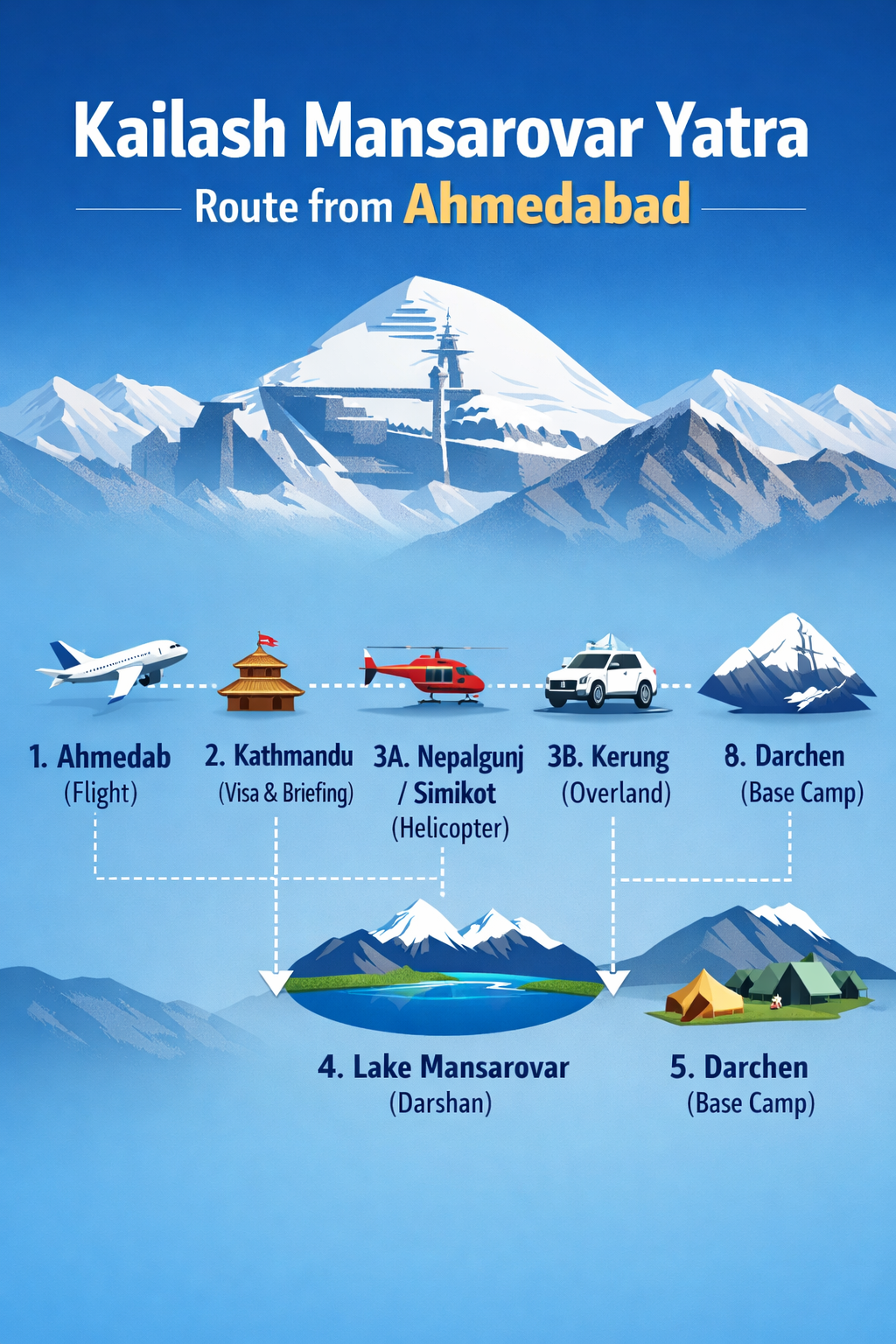
Most pilgrims from Gujarat start their journey by flying from Ahmedabad (AMD) to Kathmandu (KTM) or Lucknow.
 
Kailash Mansarovar Yatra Route from Ahmedabad – Visual Guide
 

1. The Helicopter Route (Fast & Comfortable)

This route typically goes via Lucknow or Kathmandu to Nepalgunj, then to Simikot and Hilsa by smaller aircraft/helicopter. It is the most popular choice for Kailash Mansarovar Yatra booking from Ahmedabad due to the reduced travel time.

2. The Overland Route (Traditional & Immersive)

The road trip via Kyirong (Nepal-China border) offers a gradual ascent, which is excellent for acclimatization. It is often chosen by those looking for a more value-driven Kailash tour Package from Ahmedabad.
 

Altitude & Health: Preparing for the High Himalayas

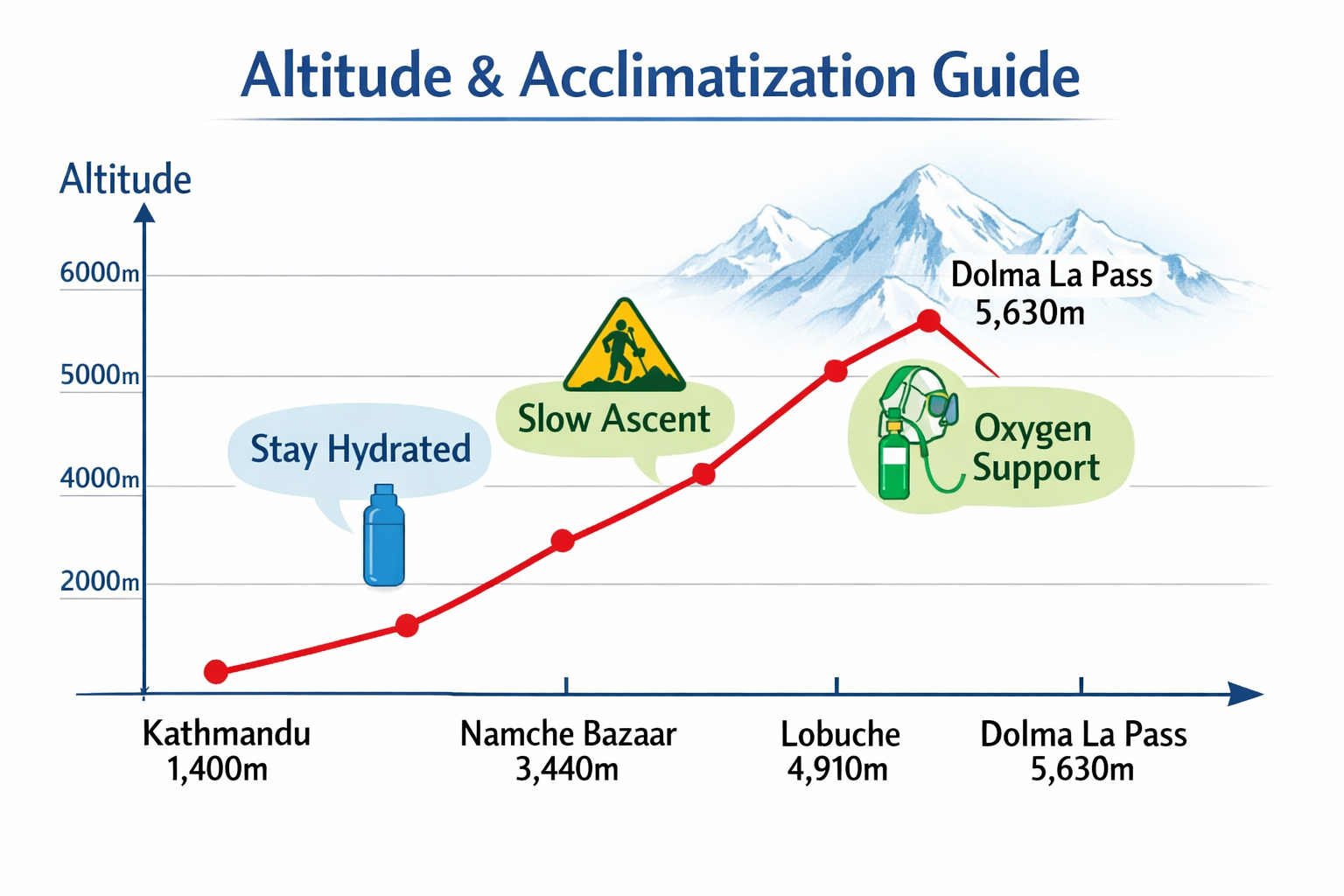
The Kailash Kora reaches an altitude of approximately 5,630 meters (18,471 ft) at Dolma La Pass. For residents of Ahmedabad (living at sea level), physical preparation is mandatory.
 
Altitude & Acclimatization Guide – Kailash Yatra 2026
Acclimatization Tips:
 
•Physical Training: Start brisk walking and breathing exercises 3 months in advance.
•Hydration: Drink 4-5 liters of water daily during the yatra to prevent Altitude Sickness (AMS).
•Slow & Steady: Never rush during the Parikrama; listen to your body and use oxygen support if needed.
 

Essential Packing Checklist for Pilgrims

Packing the right gear can make or break your spiritual experience.
 
Essential Packing Checklist – Kailash Mansarovar Yatra
 
  • Clothing: Heavy down jackets, thermal inners, woolen socks, and waterproof gloves.
  • Footwear: Sturdy, broken-in trekking boots with good ankle support.
  • Health Kit: Personal medications, Diamox (after consulting a doctor), sunscreen, and lip balm.
  • Spiritual Items: Rudraksha mala, camphor (helps in breathing), and a small prayer book.
 

Documents and Permits for Indian Pilgrims

Booking a Kailash Mansarovar Yatra from Ahmedabad requires several official formalities:
1.Valid Indian Passport: Must have at least 6 months of validity.
2.China Visa & Tibet Travel Permit: Handled entirely by Travel Dukaan for our group departures.
3.Medical Certificate: A fitness certificate from a registered practitioner is often required.
 
For official government guidelines, you may refer to the .
 

Why Book Your Kailash Yatra with Travel Dukaan?

  • As an Ahmedabad-based operator, we understand the specific needs of Gujarati pilgrims—from food preferences (Jain/Swaminarayan meals) to language comfort.
  • Expert Ground Support: Experienced Sherpas and local guides.
  • Fixed Departures: Guaranteed 2027 dates to help you plan your leave.
  • Safety First: Pulse oximeters, oxygen cylinders, and emergency evacuation protocols included in every package.


FAQs:

Q: What is the cost of Kailash Mansarovar Yatra from Ahmedabad in 2027?


A: The cost varies by route, ranging from INR 1.2 Lakhs to INR 3.5 Lakhs. Helicopter packages are generally higher but save significant time.

Q: Which is the best month for Kailash Yatra 2027?


A: May, June, and September are considered the best months due to clearer skies and manageable temperatures. Full Moon dates are highly recommended.

Q: Is there an age limit for the Kailash Yatra?


A: Generally, pilgrims between 10 and 70 years are allowed, provided they pass the required medical fitness tests.

Q: How do I book a Kailash Yatra Package from Ahmedabad?


A: You can visit our or call us directly at +91 9586613452 for a customized quote.

 
✨ Your Next Step: Share this guide with family members researching the yatra. Bookmark it. Then take the sacred step—contact us today. Let Travel Dukaan handle logistics while you focus on bhakti.
 
ॐ सर्वे भवन्तु सुखिनः
May all beings be happy. May your journey be blessed. 🌺
 
🔗 Explore More:
Complete Kailash Mansarovar Tour Packages | Ahmedabad Pilgrim Success Stories | Download Free Preparation Checklist

Panch Kailash Yatra- Visiting Lord Shiva’s Residence

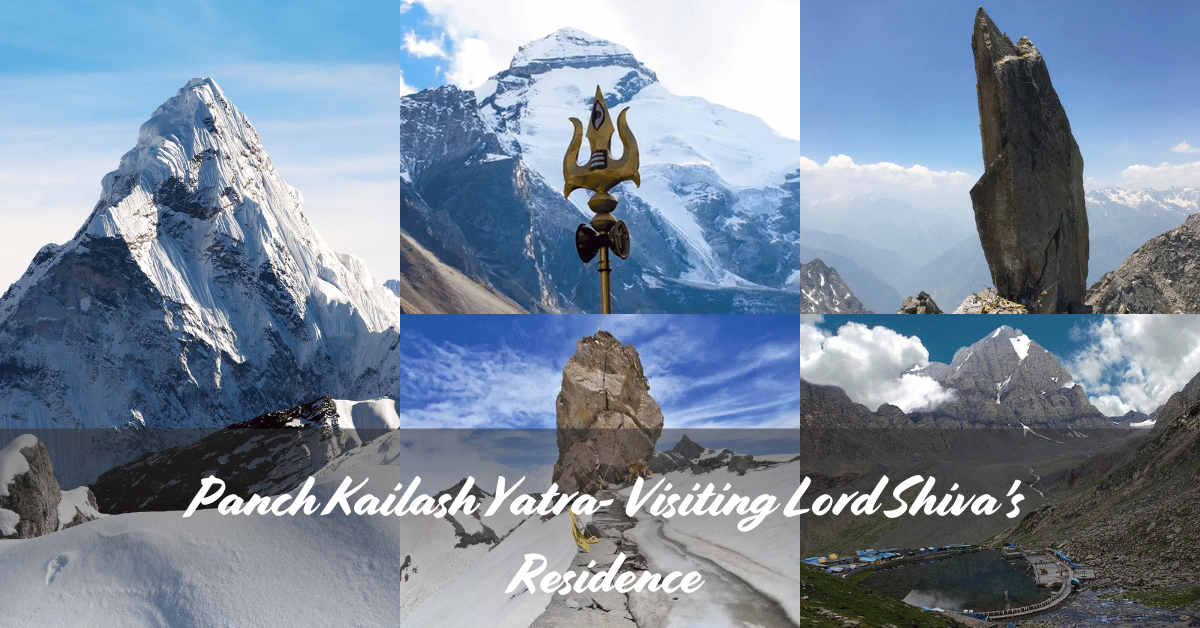
The Panch Kailash Yatra is one of the most spiritually revered pilgrimages of Hinduism that takes the pilgrims through five such mountains which are considered to be the manifestations of the divine presence of Lord Shiva. The five mountains are Mount Kailash in Tibet, Adi Kailash, Kinnaur Kailash, Shrikhand Mahadev, and Manimahesh Kailash. Each of these places is of immense mythological as well as religious significance, providing an unparalleled opportunity of physical adventure coupled with spiritual enlightenment. This yatra is not just a pilgrimage but a pilgrimage of faith, self-control, and spiritual bonding.

In this blog post, we offer a step-by-step guide to the Panch Kailash Yatra that discusses the role of each destination, the best time to go there, and preparation for the tour in case you are planning your Kailash Mansarovar Yatra.

What is Panch Kailash?

The five Kailash peaks symbolise the omnipresence of Lord Shiva throughout the Himalayas.

  • Mount Kailash, in Tibet, is the spiritual zenith of the Kailash Mansarovar Yatra, upon which it is believed that Shiva lives forever with Goddess Parvati.
  • Adi Kailash, commonly referred to as Chhota Kailash, is located in Uttarakhand and is regarded as the meditation place of the God.
  • Kinnaur Kailash, located in Himachal Pradesh, has a naturally occurring Shivling and is revered by the locals.
  • Shrikhand Mahadev presents a challenging walk that culminates in a 75-foot high Shivling on an altitude summit.
  • Manimahesh Kailash is situated close to a glacial lake that reflects the peak of the mountain and attracts thousands of pilgrims every year.

Every Kailash has its own legends, hurdles, as well as religious benefits, and collectively, they constitute a journey that symbolises devotion, cleansing as well as liberation.

Start Your Spiritual Journey with Travel Dukan

At Travel Dukan, we recognise the significance of this holy pilgrimage. Operating for more than 13 years in planning spiritual as well as leisure travel, our experts ensure everything from transportation and stay to permits and security is arranged. You could be planning the Kailash Mansarovar Yatra or the entire circuit of the Panch Kailash – our team designs your journey in accordance with your requirements as well as beliefs.

Plan your Panch Kailash Yatra with Travel Dukan and embark on the first step of spiritual fulfilment and divine serenity. Get in touch today to start your pilgrimage to the hallowed homes of Lord Shiva.

5 Quick Tips for the Kailash Mansarovar Yatra

The Kailash Mansarovar pilgrimage is more than a travel experience. It is a journey set in the breathtaking Himalayan region, known for its unparalleled beauty, on our planet.

People from all over the world visit Mount Kailash and Lake Mansarovar because they seek either spiritual peace or adventure on this journey that has attracted numerous seekers and explorers. Before embarking upon your journey, to the revered Kailash Mansarovar pilgrimage site, in Tibet take heed of these 5 tips to make your trip smooth and spiritually rewarding.

5 Essential Tips for a Successful Journey

1. Start Fitness Prep Early

The Kailash Mansarovar Yatra presents significant challenges because it requires navigating through high-altitude terrain and extensive trekking routes. Start your fitness program two to three months before your planned activity trip.

Focus on exercises such, as cardio workouts, and light hiking to get your body ready. Getting used to the altitude, can help reduce the risk of altitude sickness setting in.

2. Pack Everything Smartly, Travel Light

Weather conditions can shift quickly within a period. The planned activities require layered clothing to maintain comfort and preparedness for any situation. Make sure to pack your clothing and a waterproof jacket to shield yourself from rain or snow showers during your trip. Don’t forget to bring trekking shoes for stability, on different terrains and gloves to keep your hands warm and protected from the weather.

When you’re out in the sun enjoying activities, like hiking or picnicking on a sunny day make sure to wear sunglasses to shield your eyes from the bright rays and apply sunscreen to protect your skin from getting burned. Don’t forget to pack a basic first aid kit in case of any unexpected emergencies that may arise during your adventure.

3. Keep all Your Documents Ready

Ensure your passport remains valid for a minimum of six months from your travel date, and remember to obtain the necessary approvals, permits, and documents, depending on your chosen route (through Nepal, China, or India). It’s advisable to carry both digital copies of your paperwork.

4. Hydration Is Sacred Too

Drinking enough water during mountain trips, helps prevent altitude sickness. Bring a refillable water bottle with you. Make sure to stay hydrated by drinking water throughout the day when you’re not feeling thirsty. Choose hot beverages, such as teas to maintain your body temperature, and hydration levels.

5. Respect the Sacredness

Mount Kailash and Lake Mansarovar are deeply revered for their importance. Remember to be respectful. Avoid music and littering and refrain from photography. This adventure goes beyond seeing sights. It’s a journey where humility leads the way.

Travel Smart with Experts

Embark upon your quest, with the support of professionals at Travel Dukaan. Under the reliable management of Sarva Tours & Travels. Ensuring a smooth and fulfilling experience for you! With over a decade of travel experience and a stellar track record of achieving 100 percent customer satisfaction for 13 years straight in the Ahmedabad area, we proudly stand as the choice for Tours and Travel Operators in the region.

A small tour company has blossomed into a travel hub offering international trips to over 30 breathtaking locations! Join our Travel Dukaan community, featuring over 100,000 delighted explorers, and let our team guide you through the Kailash Mansarovar Yatra.

Enquiry Now