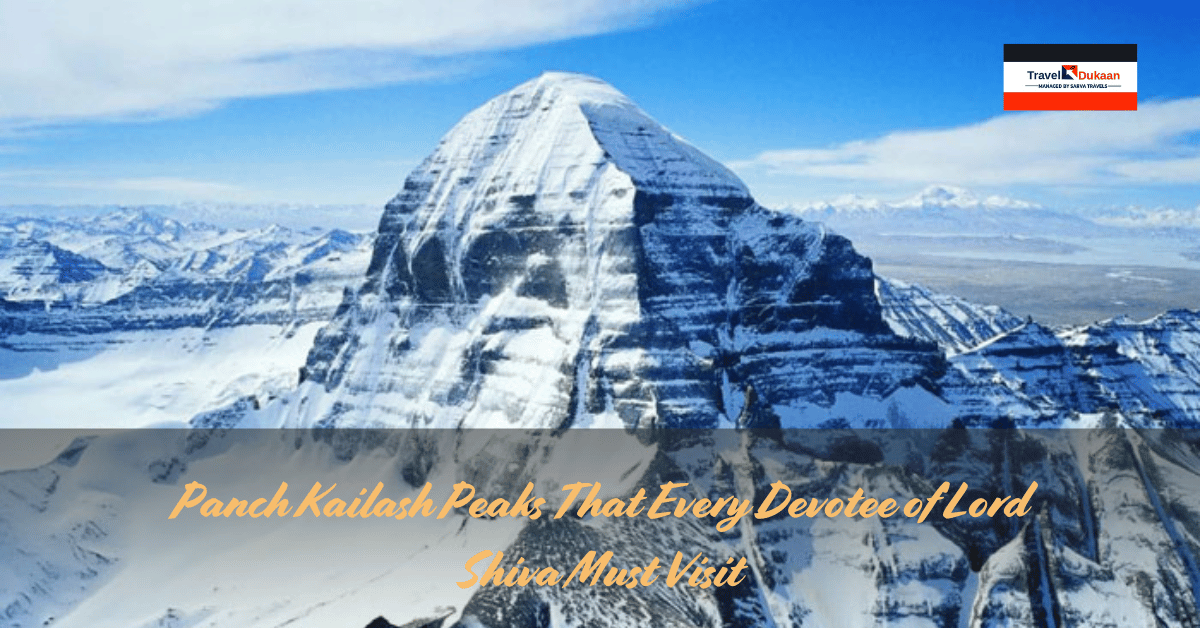
Panch Kailash Peaks That Every Devotee of Lord Shiva Must Visit

For all those who have been touched by Lord Shiva, the Panch Kailash Peaks are not merely mountains. They are sacred, energetic sites steeped in centuries of belief, myth, and divinity. All of the five peaks are said to be residences of Lord Shiva, and to visit them means to step closer to the divinity. It is not about the trek or the scenery, but about experiencing something within.

5 Kailash Mountains & Everything You Need to Know About Them

Mount Kailash is the most sacred site

Of all the five, the most renowned and most revered is Mount Kailash. It’s in Tibet and is said to be the permanent residence of Lord Shiva. People from all around the globe visit here to do the Kora, which is going around the mountain. It is said to cleanse you of all sins and bring peace to your soul.

Adi Kailash: The Smaller Twin

Adi Kailash is also referred to as Chhota Kailash and is situated near the Tibet-Indian border. It is very similar in form to Mount Kailash but is far less crowded. It is a nice spot for silent reflection and introspection with Shiva due to the serene environment, Parvati Sarovar, and Gauri Kund.

Kinnaur Kailash, located in the Bazan

This Himachal Pradesh peak has a very tall rock in the form of a Shivling. It is special because its colour changes with the passage of the day. Reaching there is not simple, but it is well worth it for the person with conviction in his heart.

Shrikhand Mahadev: Struggling Trek, Stronger Faith

Shrikhand Mahadev is located at great heights in the mountains. A naturally formed Shivling is situated at the top, and the trek to the top is indeed a test of strength as well as belief. However, when you get there, the experience is really unique.

Manimahesh Kailash is the meditation spot of

At the serene Manimahesh Lake in Chamba, this summit is said to be where Lord Shiva is meditating. People gather in large numbers at Manimahesh Yatra during Janmashtami and Radha Ashtami.

Conclusion

Like its name suggests, Panch Kailash yatra combines a journey to the five sacred peaks of Mahadev with tales of Shiva and nature blending into one, creating a surreal experience for pilgrims, which makes it feel like a dream. That’s why for every ‘Shiva Bhakt’, this fantastic tour stands for more than just a pilgrimage.
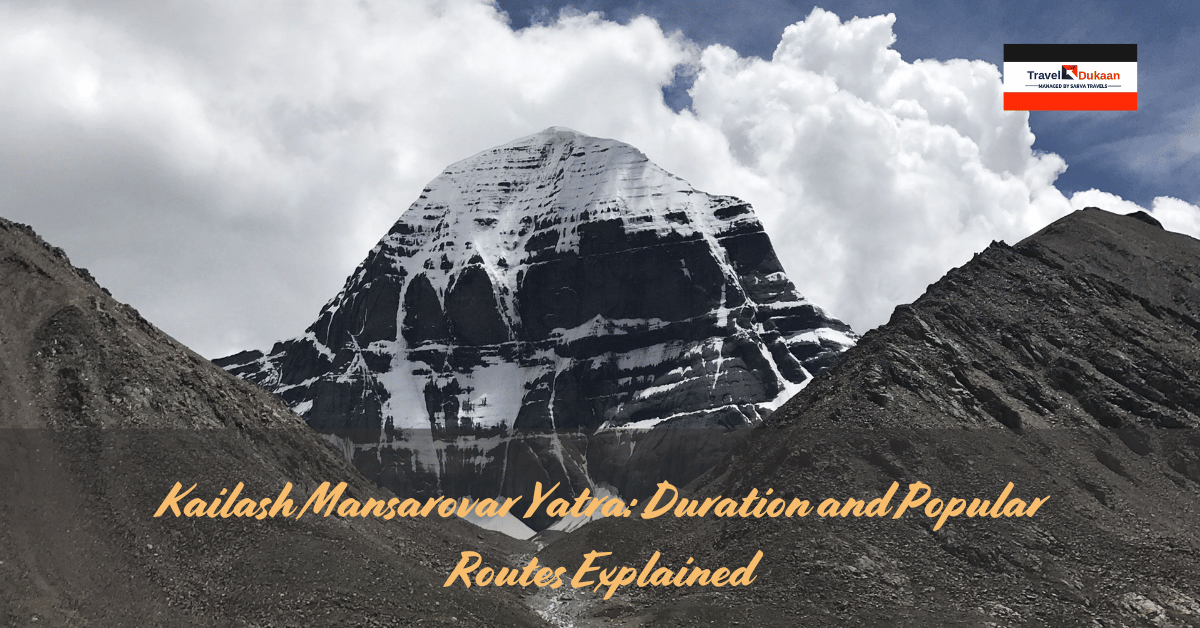

 

Kailash Mansarovar Yatra: Duration and Popular Routes Explained

If you’re planning a spiritual journey like never before, the Kailash Mansarovar Yatra is a must. Hindus, Buddhists, Jains, and Bön practitioners all treat this sacred pilgrimage to Mount Kailash and Lake Mansarovar with reverence. It is more than the destination, however. It is the incredible journey that fills your soul. First, before you set out, it is important that you understand the length and the routes so that you can make the most informed decision.

How Long Does the Yatra Take?

The duration of the Kailash Mansarovar Yatra is variable according to route and mode of travel. It is generally two to three weeks. The Lipulekh Pass route, for instance, is approximately 14 to 18 days, while the Nathu La route is as long as 21 days. Helicopter-supported routes take less time, around 9 to 12 days, but you’ll still need to acclimatise to altitude.

Popular Routes for the Yatra

Lipulekh Pass Route (Uttarakhand)

This is one of the most popular and traditional routes. It begins from Delhi and continues through Dharchula and Gunji, where acclimatisation was done prior to crossing the Lipulekh Pass into Tibet. The journey continues from there to Lake Mansarovar and Mount Kailash. There is much trekking on this route, so this is most suited for adventure enthusiasts.

Nathu La Pass Route (Sikkim)

It was introduced in 2015 and is less physically demanding. Pilgrims start in Gangtok, Sikkim, and travel by bus all the way up to Shigatse in Tibet. Being less trek-based, it is a more favorable option for pilgrims seeking a less demanding journey.

Simikot-Hilsa Route (Nepal)

It is popular with overseas visitors. It starts in Kathmandu, with flights from there and from Hilsa to Simikot, followed by overland travel into Tibet. The scenery is stunning, and the views of the Himalayas are great.

Also Read: How to Apply for the Kailash Mansarovar Yatra?

Key Points to Remember

    • Acclimatisation is essential: Your body needs acclimatisation time at high altitudes.

    • Become physically fit: Exercise regularly in preparation for the hike.

    • Bring your permits with you: They are essential during the journey.

    • Pack according to the weather: The weather can change suddenly, even during the June through September period.

Conclusion

The Kailash Mansarovar Yatra is a spiritual and self-realisation journey. With the right preparation and the right frame of mind, it is bound to be a memorable one.

How to Apply for the Kailash Mansarovar Yatra?

The Kailash Mansarovar Yatra is a sacred pilgrimage that is visited by numerous Indian devotees annually. The Ministry of External Affairs, Government of India, organises this yatra between June to September. It will bring you to Mount Kailash, which is holy, and Lake Mansarovar in the Himalayan mountains. If you’re planning to travel, here is an easy and straightforward explanation on how to apply and what to do before leaving.

Kailash Mansarovar Yatra Application Procedure

Check if You’re Eligible

Check first if you’re eligible. You have to be an Indian citizen, between 18 to 70 years old. Your passport must have at least six months’ validity remaining. Your physical and mental health is also crucial since you will traverse high altitudes in the yatra. It’s not all about religion—you’re going to need some endurance as well.

Opt for What Works for You

Two options exist. The Lipulekh Pass option in Uttarakhand is for adventure sportspeople. It is more of an effort because one has to walk in hilly areas. The Nathu La Pass option in Sikkim is easy, with most part being in vehicles. If you desire an easy journey, this one is suitable.

Register online

Visit the website at https://kmy.gov.in. Fill in the online application. You’ll have to submit a passport photograph and an image scan of your passport. You also have to pay a non-refundable registration fee of ₹1,000. Ensure that all your details are accurate so that there is no delay later on.

Selection Procedure and Medical Tests

The choice is made using a computer-based lottery. Once selected, you will have to undergo health check-ups at centres such as Delhi. The tests are to ensure that you’re capable of withstanding the journey. Then, there is an orientation session where you’ll receive crucial tips for travelling, tips on packaging, as well as security guidelines.

Last Steps Before the Quest

After passing your medical checkup, you will have to remit the complete yatra fee, varying from ₹1.5 to ₹2.5 lakh depending on where you’re travelling to. You’ll be grouped in a batch with other pilgrims.

Government officials have trained personnel, physicians, as well as security personnel, accompanying you throughout the journey so that you can have an unhindered experience on your spiritual quest.

Conclusion

Embarking on the Kailash Mansarovar Yatra is a profound spiritual journey. To ensure a seamless and enriching experience, consider planning your pilgrimage with Travel Dukaan. Their expert guidance and comprehensive packages are designed to make your sacred adventure memorable and hassle-free.

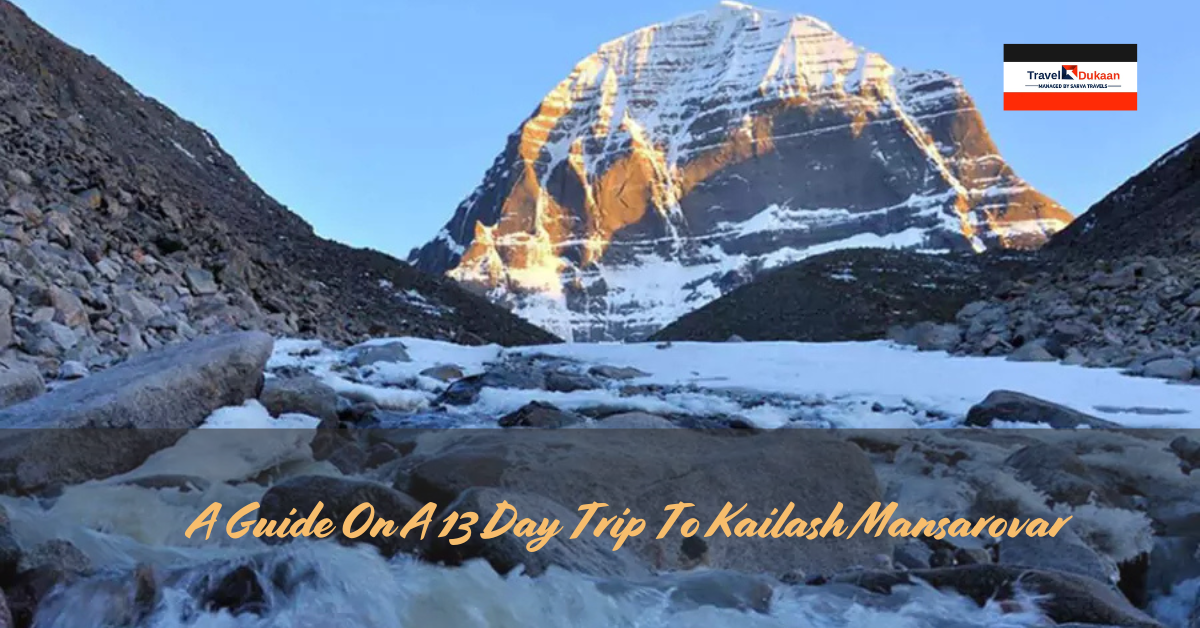
A Guide On A 13 Day Trip To Kailash Mansarovar

Few experiences can rival standing in front of Mount Kailash, where nature and divinity appear to become one. For centuries, pilgrims have been coming to this holy site from all over the world, just as for its spiritual attraction but also due to the sheer beauty of the Himalayas. This 13-day odyssey combines devotion, strength, and exploration, an inner and outer adventure not to be forgotten.

Itinerary and Travel Procedure for Kailash Mansarovar Yatra

Day 1–2: Start Point – Kathmandu Vibes

Kathmandu, the capital of Nepal, and one of its most culturally rich cities, is where your adventure will begin. Add the sacred Pashupatinath Temple, to your itinerary ,as it is a must see when visiting the city. Gear check, visa business, hotel check ins, and some leisure sightseeing depending on time will take care of day one.

Moving towards the Border and Beyond (Days 3–5)

The road to Syabrubesi is picturesque and serene, ideal for imbibing in the pre-Tibet tranquillity. Entry into Tibet and arrival in Kyirong give you your initial exposure to high-altitude living. A day is reserved here to acclimatise, so take your time and allow your body to adapt.

Into the Himalayas deeper (Days 6–7)

From Kyirong, the route winds its way to Saga, an area of sweeping, dreamlike landscapes. Up next is the awe-inspiring Lake Mansarovar. A swim in its sacred waters is not just a ritual. It’s an intense, moving experience of contemplation and unity.

Also Read: Kailash Mansarovar Yatra 2025, Tour Pre-planning Guide – Devotional Journey

Mount Kailash Trek Begins (Days 8–11)

At Darchen, you prepare for the long walk around Mount Kailash. Day one gets you to Dirapuk, in whose silent grandeur the north side of the mountain looms. Tomorrow’s toughest stretch is over the mighty pass of Dolma La and down to Zuthulpuk. You also walk alongside the sacred lake of Gauri Kund, said to be where Goddess Parvati bathed. Then you walk back to Darchen, weary but changed.

Winding Down (Days 12–13)

The journey back to Saga and thence to Kathmandu is one of silent gratitude. With every kilometre, you bring ba+ck memories, prayers, and an inner calm that remains long after you have returned.

Conclusion

The journey is full of physical obstacles and profound spirituality. With this in mind, participating in the Kailash Mansarovar Yatra is a memorable experience. If planned carefully, the trip is enlightening, offering myriad lessons and memories for a lifetime.

Enquiry Now