Plan a Kailash Mansarovar Yatra by helicopter with transparent logistics, high-altitude safety planning and end-to-end permit support from Travel Dukaan. This route is designed for travellers who want to reduce road travel in Nepal and reach the Tibet border more efficiently. It does not eliminate the physical demands of travelling above 4,500 metres or walking parts of the Kailash Parikrama.
Important: Kailash Yatra operations depend on Chinese and Nepalese permits, border permissions, weather, helicopter availability and government regulations. Routes, dates, accommodation and prices can change without notice. Confirm the final itinerary and cancellation terms in writing before paying.
Medical & High-Altitude Safety Disclaimer
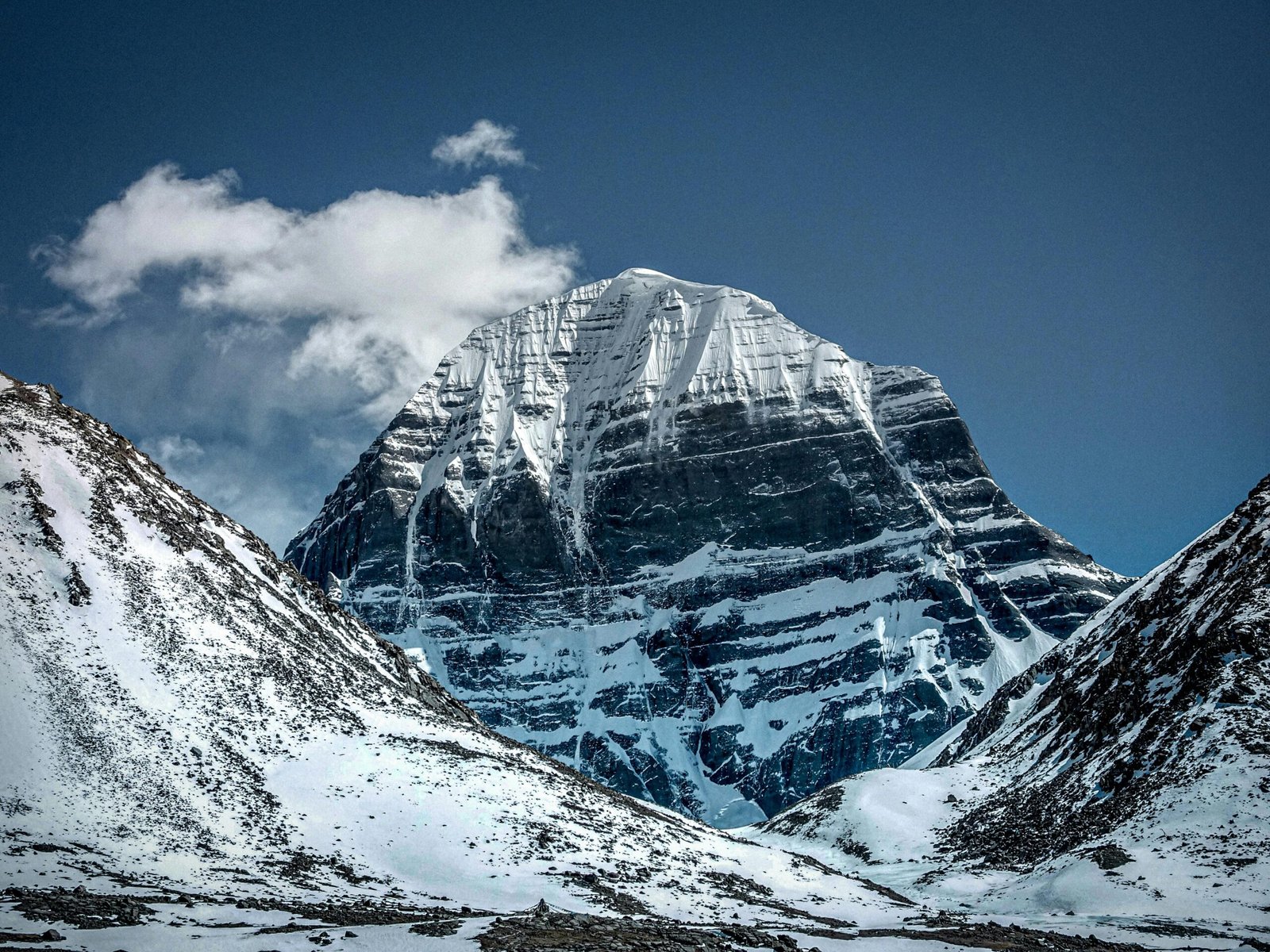
Mount Kailash and Lake Mansarovar are located at extreme altitude. Lake Mansarovar is approximately 4,590 metres above sea level, Darchen is approximately 4,575 metres, and Dolma La Pass on the standard Kailash Parikrama is approximately 5,630 metres.
This journey may cause acute mountain sickness (AMS), altitude-related pulmonary or cerebral oedema, dehydration, hypothermia or other serious medical problems. A helicopter transfer does not prevent altitude illness; in some cases, rapid ascent can increase risk.
Before booking:
- Obtain medical clearance from a doctor familiar with high-altitude travel.
- Discuss heart, lung, blood-pressure, kidney, pregnancy and previous altitude-related conditions with your doctor.
- Do not rely on medication without professional medical advice.
- Inform the expedition manager about existing conditions and prescribed medicines.
- Follow instructions to stop, descend or evacuate if symptoms worsen.
- Travel insurance should specifically cover high-altitude trekking, helicopter evacuation and repatriation. Many standard policies exclude these benefits.
Read the WHO information on travel at high altitude and consult your physician before making a booking. Travel Dukaan is a travel operator, not a medical provider, and cannot determine whether an individual is fit to travel.
What Is Kailash Yatra by Helicopter?
Kailash Yatra by helicopter generally refers to a Nepal-side itinerary in which pilgrims:
- Fly from Kathmandu to Nepalgunj.
- Take a charter or scheduled helicopter flight to Simikot.
- Fly from Simikot to Hilsa near the Nepal–Tibet border.
- Cross into Tibet after the required immigration and permit procedures.
- Travel by vehicle through Purang/Taklakot to Lake Mansarovar and Darchen.
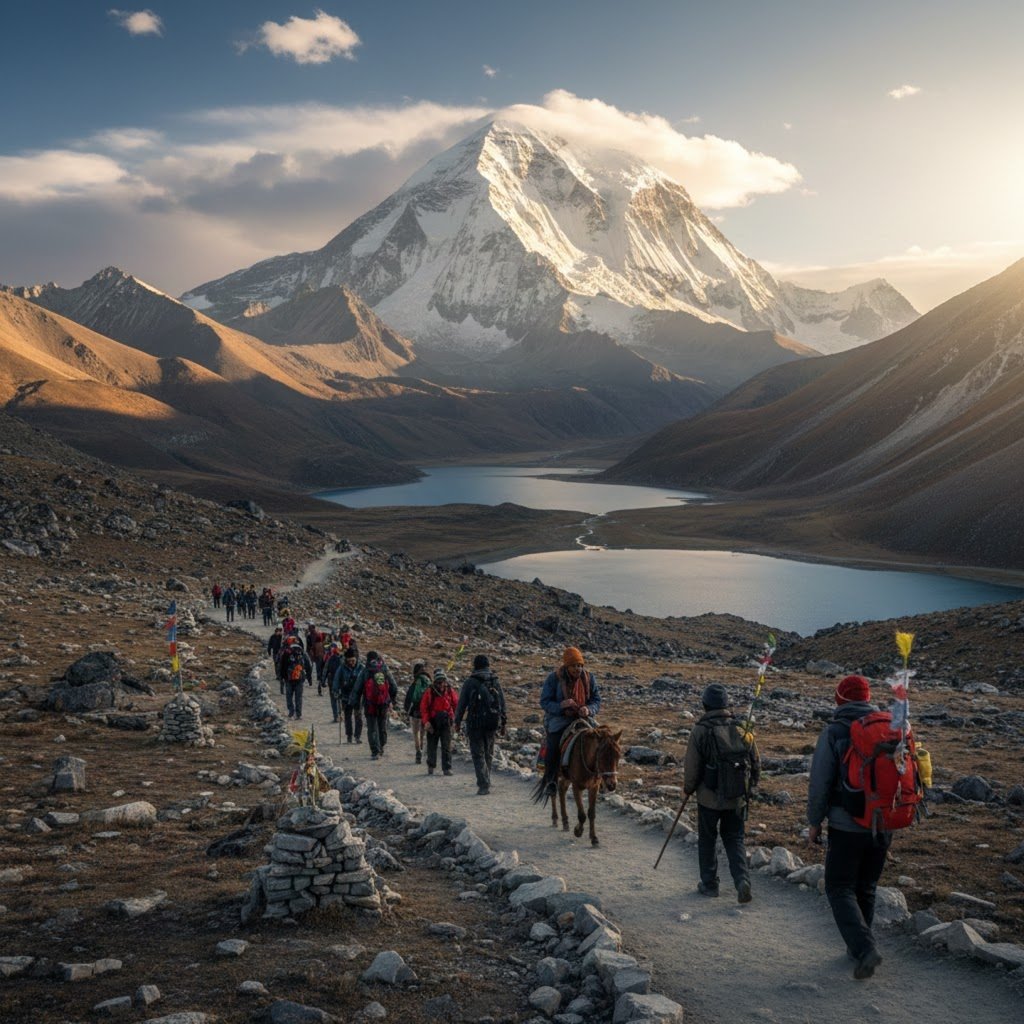
- Complete the Kailash Parikrama, usually by vehicle and on foot.
- Return through the Hilsa–Simikot–Nepalgunj route, subject to weather and border conditions.
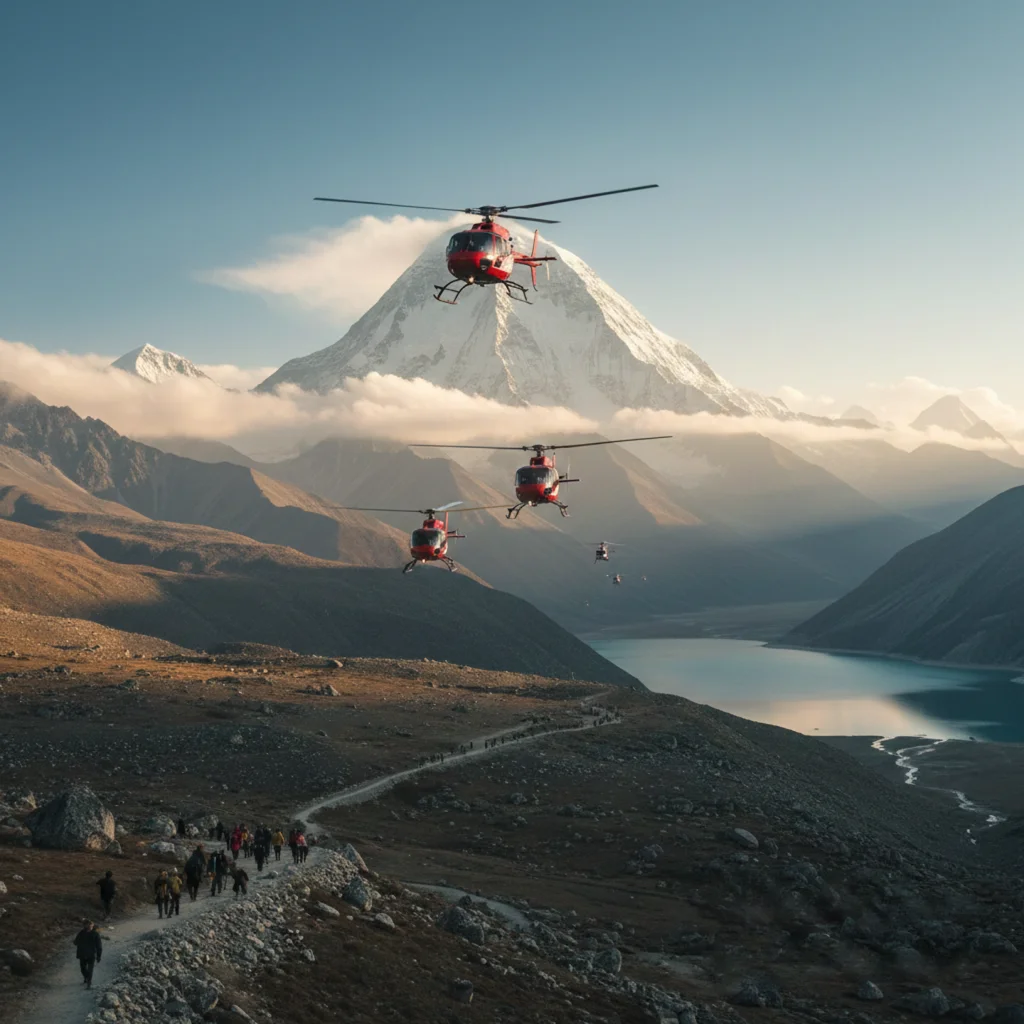
A helicopter normally transports travellers to the Hilsa border area. It does not fly tourists directly to Mount Kailash, over the summit, or around the entire mountain. The Kailash Parikrama remains physically demanding, particularly on the approach to Dolma La Pass.
Why Choose the Helicopter Route?
The helicopter route can reduce the amount of overland travel in western Nepal compared with a road-based approach. It may suit travellers who:
- Have limited time.
- Prefer to avoid several days of rough mountain roads.
- Want a more controlled Nepal-side transfer.
- Are comfortable with high-altitude conditions.
- Understand that the route remains dependent on aviation and border operations.
What the Helicopter Route Does Not Guarantee
A helicopter package cannot guarantee:
- Clear weather on every flight sector.
- Same-day border crossing.
- Permission to enter Tibet.
- A successful Kailash Parikrama.
- A specific darshan or religious access arrangement.
- Evacuation availability at all times.
- Refunds for delays caused by weather, government restrictions or force majeure.
The safest operator is not the one promising certainty. It is the one explaining what can and cannot be controlled.
Typical Kailash Helicopter Yatra Itinerary
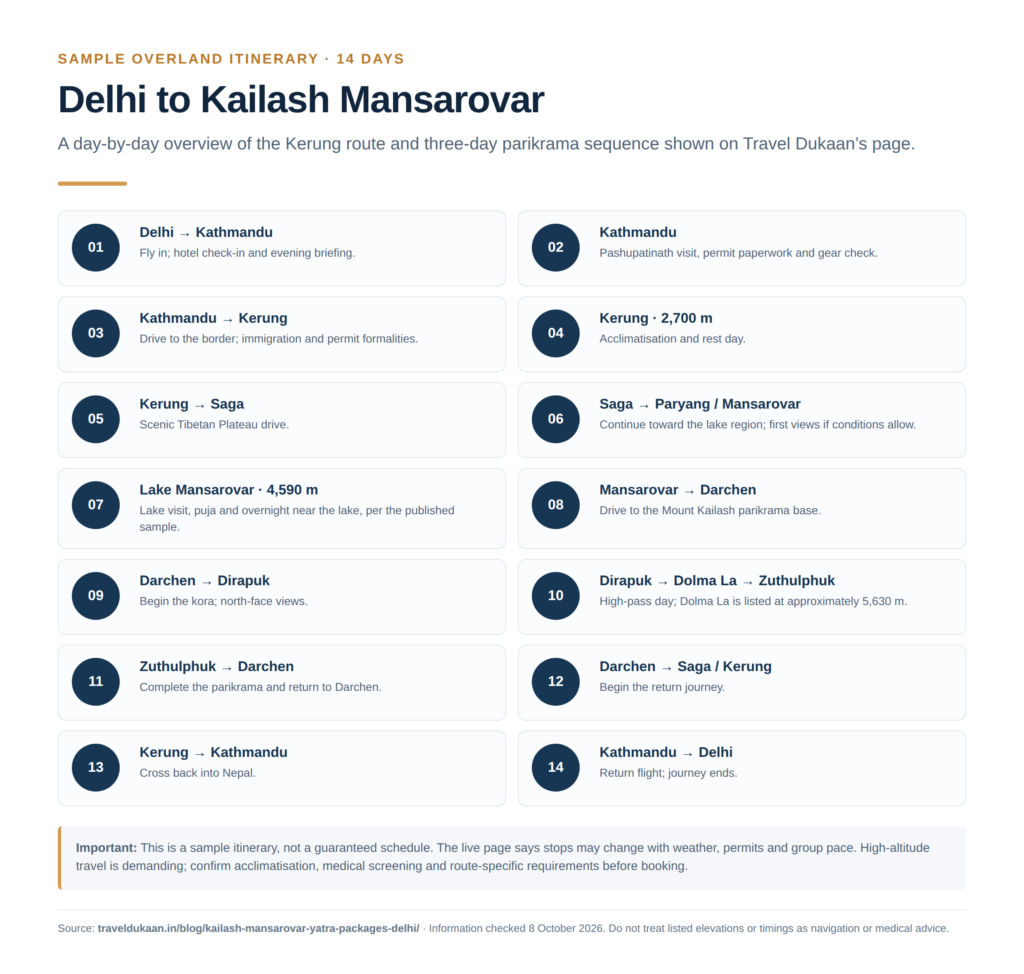
The following is a representative itinerary, not a fixed departure schedule. The final programme depends on permits, border opening, helicopter slots, acclimatisation requirements and group movement.
Day 1: Arrival in Kathmandu
- Airport transfer and hotel check-in.
- Passport and document verification.
- Pre-departure briefing.
- Medical and equipment review.
- Final permit and flight confirmation.
Day 2: Kathmandu to Nepalgunj
- Domestic flight to Nepalgunj, generally in the western Terai.
- Overnight stay near the airport.
- Weather and helicopter-operation briefing.
Day 3: Nepalgunj to Simikot
- Flight to Simikot, located at approximately 2,900 metres.
- Rest and acclimatisation.
- Helicopter scheduling for the following sector.
Day 4: Simikot to Hilsa and Border Crossing
- Helicopter flight from Simikot to Hilsa, near the Nepal–Tibet border.
- Immigration and border formalities.
- Transfer into Tibet, subject to the border schedule and permit clearance.
- Drive to Purang/Taklakot, approximately 3,700–3,800 metres.
The Simikot–Hilsa helicopter sector is particularly sensitive to cloud, wind, visibility, aircraft rotation and passenger weight restrictions. Travellers should be prepared for delays or an overnight stay in Simikot.
Day 5: Acclimatisation in Purang
- Rest at altitude.
- Short, easy local movement only if approved by the group medical or logistics team.
- Hydration, oxygen-saturation monitoring where available and briefing for the Mansarovar sector.
Day 6: Purang to Lake Mansarovar
- Overland transfer toward Lake Mansarovar.
- First views of Mount Kailash may depend on visibility.
- Mansarovar visit, subject to local permissions, weather and the operating plan.
- Overnight accommodation as specified in the confirmed itinerary.
Day 7: Mansarovar to Darchen
- Optional religious activities only where legally and operationally permitted.
- Transfer to Darchen, the usual starting point for the Kailash Parikrama.
- Final equipment and porter arrangements.
- Rest before the trek.
Day 8: Darchen to Dirapuk
- Vehicle transfer to the permitted trailhead.
- Trek toward Dirapuk, commonly the first overnight point on the Parikrama.
- Approximate walking distance varies by route and operational restrictions.
- Emergency support and porter availability must be confirmed before booking.
Day 9: Dirapuk to Dolma La and Zuthulpuk
- The most strenuous day for many pilgrims.
- Crossing near Dolma La at approximately 5,630 metres.
- Descent toward the Zuthulpuk area.
- Weather, snow, trail conditions and individual health determine whether the group proceeds.
Day 10: Zuthulpuk to Darchen and Return Toward Purang
- Complete the Parikrama route.
- Meet the vehicle at the designated point.
- Return toward Purang or the accommodation listed in the final itinerary.
Day 11: Purang to Hilsa and Simikot
- Drive to the Tibet-side border point.
- Complete exit and Nepal immigration procedures.
- Helicopter flight from Hilsa to Simikot, subject to operational conditions.
- Overnight in Simikot if required.
Day 12: Simikot to Nepalgunj and Kathmandu
- Fly to Nepalgunj and connect to Kathmandu, where available.
- If weather or aircraft rotation prevents the connection, an additional night may be required.
Day 13: Buffer Day
A buffer day is strongly recommended. It may be used for:
- Weather delays.
- Helicopter rescheduling.
- Border congestion.
- Permit or group movement changes.
- Medical rest or evacuation logistics.
Do not book an international departure immediately after the planned return unless the operator confirms a realistic contingency plan.
Package Inclusions
- Kathmandu airport transfers.
- Kathmandu hotel accommodation.
- Nepalgunj hotel accommodation.
- Kathmandu–Nepalgunj domestic flights.
- Nepalgunj–Simikot domestic flights.
- Simikot to Hilsa helicopter flight.
- Hilsa to Simikot return helicopter flight.
- Tibet travel permits and group-entry documentation, where arranged by the operator.
- Tibet-side transport by approved vehicle.
- Accommodation in Purang/Taklakot, Lake Mansarovar area and Darchen.
- Meals specified by the itinerary.
- Kailash Parikrama transport and trailhead transfers.
- Porter or pony support, if specifically listed.
- English- or Hindi-speaking group coordinator, if specified.
- Basic first-aid support and emergency oxygen availability, if included.
- Border, guide and local administration charges stated in the quotation.
- Mansarovar Parikrama or circumambulation arrangements, only to the extent legally and operationally permitted.
- VIP darshan arrangements, only if a specific religious-site access service exists and is confirmed in writing. “VIP” must not be used to imply guaranteed access to Mount Kailash or restricted areas.
Package Exclusions
Unless expressly included in your contract, assume the following are excluded:
- International flights.
- Indian, Nepalese or other visa fees.
- Personal travel insurance.
- High-altitude rescue or helicopter evacuation charges.
- Medical treatment, hospitalisation and repatriation.
- Personal medicines and prescription supplies.
- Personal porter or pony charges beyond the stated allowance.
- Extra baggage or excess helicopter baggage fees.
- Additional hotel nights caused by weather, illness, border closure or personal choice.
- Meals outside the listed meal plan.
- Laundry, telephone, internet and personal purchases.
- Tips and gratuities.
- Camera, drone or special equipment permits.
- Government taxes introduced after quotation.
- Costs caused by quarantine, public-health restrictions or regulatory changes.
- Accommodation upgrades.
- Any private vehicle or private helicopter charter not listed in the signed quotation.
Ask for a written inclusion and exclusion schedule, not only a brochure summary.
Kailash Yatra Helicopter Package Price
There is no single fixed price for a Kailash Mansarovar helicopter tour package. The final cost usually depends on:
- Departure date and seasonal demand.
- Group size.
- Helicopter sector and aircraft availability.
- Tibet permit and local administration charges.
- Hotel category and room occupancy.
- Parikrama transport, pony and porter arrangements.
- Guide and language requirements.
- Foreign-exchange fluctuations.
- Government taxes and border-related charges.
- Private versus group logistics.
- Evacuation and insurance requirements.
A “luxury Kailash Yatra operator price” should be compared by what is included, not just by the headline amount. A lower quote may exclude helicopter delays, border accommodation, porter support, permit charges, meals or emergency contingencies.
Request a Transparent Quote
Before paying a deposit, ask Travel Dukaan for:
- Total price per traveller.
- Currency and applicable taxes.
- Deposit amount and payment schedule.
- Cancellation and postponement rules.
- Refund treatment for helicopter or border delays.
- Exact hotel names or accommodation standards.
- Baggage allowance for each flight.
- Insurance requirements.
- Medical and evacuation procedures.
- Written confirmation of all permits and route sectors.
Safety and Acclimatisation Protocol
Altitude Is the Main Risk
Travellers may feel well in Kathmandu or Nepalgunj and still develop symptoms after reaching Simikot, Purang, Mansarovar or Darchen. Common AMS symptoms include:
- Headache.
- Nausea.
- Dizziness.
- Unusual fatigue.
- Loss of appetite.
- Difficulty sleeping.
Severe symptoms such as confusion, inability to walk normally, breathlessness at rest, persistent vomiting or a worsening cough require urgent medical attention and possible descent or evacuation.
Practical Safety Rules
- Walk slowly and avoid unnecessary exertion.
- Drink regularly, but do not force excessive water.
- Avoid alcohol and sedatives at altitude.
- Keep warm, especially overnight.
- Eat small, energy-rich meals.
- Report symptoms early rather than hiding them from the group leader.
- Never continue toward Dolma La while seriously unwell.
- Carry essential medicines in hand luggage.
- Keep a copy of prescriptions and emergency contacts.
- Follow the operator’s oxygen and evacuation instructions.
Weather, Border and Flight Disruptions
The Nepal helicopter sectors are vulnerable to low cloud, strong winds, rain and visibility changes. The western Nepal monsoon can disrupt flights, while conditions around the Tibetan plateau can change quickly even during the general pilgrimage season.
Most departures are planned during the usual May–September travel window, but the best period varies by year and does not guarantee suitable weather. Border operating days, permit issuance and travel restrictions may also change.
If a flight is delayed:
- Remain available at the designated hotel or airport.
- Keep sufficient medication and warm clothing accessible.
- Do not surrender your passport except to authorised officials or the documented operator process.
- Obtain written information about revised accommodation and additional charges.
- Do not independently cross or approach restricted border areas.
Check official updates from the Nepal Tourism Board and relevant government travel advisories, including the Indian Ministry of External Affairs, before departure.
Documents and Preparation Checklist
Prepare the following well in advance:
- Passport with sufficient validity.
- Recent passport photographs.
- Emergency contact details.
- Medical certificate, where required.
- Travel insurance certificate.
- Proof of payment and signed booking terms.
- Copies of prescriptions.
- Personal medication.
- Thermal layers and waterproof outerwear.
- Broken-in trekking shoes.
- Sunglasses with high UV protection.
- Sunscreen and lip balm.
- Headlamp and spare batteries.
- Water bottle or hydration system.
- Small daypack.
- Personal toiletries.
- Power bank and charging accessories.
- Walking poles, if helpful.
- Duffel bag within the stated baggage limit.
Do not pack your only medication, passport copy or essential documents in checked or transported baggage.
How Travel Dukaan Should Manage Your Booking
A professional booking process should include:
- A suitability discussion before payment.
- A written itinerary with altitudes and distances.
- A line-by-line quotation.
- Permit and border-process explanation.
- Medical and insurance requirements.
- Emergency and delay procedures.
- Contact details for the responsible operations team.
- Clear cancellation and refund terms.
- A pre-departure briefing.
- A post-booking document checklist.
Book Kailash Yatra by Helicopter
If you are ready to enquire, send Travel Dukaan:
- Preferred travel month.
- Number of travellers.
- Nationality and passport status.
- Age of each traveller.
- Relevant medical conditions.
- Whether you require a private or group departure.
- Preferred room occupancy.
- Need for porter, pony or additional support.
- Desired language for the guide.
- International arrival and departure dates.
Request Your Current Departure Plan
Enquire with Travel Dukaan for a current Kailash helicopter route, permit feasibility check and itemised quotation.
Before confirming, ask the Travel Dukaan representative to identify:
- The Nepal–Tibet border point being used.
- Whether the Simikot–Hilsa helicopter sector is included both ways.
- The number of planned acclimatisation nights.
- The exact Parikrama support arrangement.
- The buffer days included.
- The refund policy if the helicopter cannot operate.
- Whether emergency evacuation is included or separately chargeable.
Frequently Asked Questions
What is the success rate of Kailash Yatra by helicopter?
No reliable universal success rate exists. Completion depends on weather, permits, border operations, health, altitude tolerance and trail conditions. An operator should publish its own documented figures only if it explains the period, group size, cancellations and definition of “successful completion.”
What is the minimum age and medical fitness requirement?
There is no universal age threshold that guarantees suitability. Operators commonly assess older travellers and anyone with medical conditions individually. Every participant should obtain medical advice before booking and must be able to manage high altitude, cold, limited facilities and strenuous walking.
Does the helicopter fly directly to Mount Kailash?
No. The helicopter generally operates between Simikot and Hilsa on the Nepal side. Travellers then cross the border and continue by road toward Purang, Mansarovar and Darchen. The Kailash Parikrama is completed by vehicle and on foot under the authorised route plan.
Is the Kailash Parikrama included in a helicopter package?
It may be included, but the exact support must be written in the quotation. Confirm trailhead transfers, pony or porter arrangements, accommodation, meals, guide support and the consequences if illness or weather prevents completion.
Can I get a refund if weather cancels the helicopter flight?
Refunds depend on the signed booking terms, supplier charges and whether the flight was cancelled, delayed or completed later. Ask specifically about extra hotel nights, rebooking, unused sectors, border delays and force-majeure conditions before making payment.